Tough times for Africa’s economy
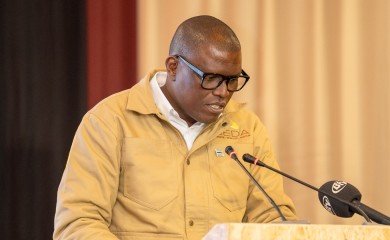
While Africa’s economic growth has been subdued by a slump in commodity prices, the continent is still the world’s second fastest growing economic zone. This was said on Thursday 3rd November by His Excellency Erastus Mwencha-Deputy Chairperson of the African Union (AU) Commission-at the opening ceremony of the Chief Executive Officers (CEO) Forum of the World Federation of Development Finance Institutions (WFDFI).
He said the African Development Bank (AfDB) estimates Africa’s economic growth at 5% in 2016, which places the continent above the global average of 3.2% and the estimated 1.7% and 2% for the Euro Zone and the United States (US) respectively. HE Mwencha, a former senior executive at the Ministry of Industry in Kenya, also takes pride in the fact that Africa will attract an estimated US$55-60billion worth of foreign direct investment inflows in 2016.
On the flip-side however, the former Secretary General of the Common Market for Eastern and Southern Africa (COMESA) is worried by constantly low commodity prices and subdued demand from Asia, which he says is offsetting economic growth and revenues in the continent. Since the early 2000’s, says HE Mwencha, Africa’s growth rate has more than doubled from just above 2% in the 1980s and 1990’s to above 5% between 2001 and 2014.
“This performance was favored by increased domestic and international demand; high commodity prices; public investments on infrastructure; tighter trade and investment linkages with emerging economies such as China; as well as the improving global economic and continental business environment,” he said.
Sadly, the opposite prevails today as difficulties related to sharp declines in commodity prices and declining revenues are the order of the day, slowing down Africa’s economic growth. Nigeria, whose economy is over 70% dependent on oil, registered declining revenues and depreciating currency value. In Botswana, an estimated 6000 people were left jobless after three copper mines; African Copper, Discovery Metals Limited and BCL closed shop. In Zambia, 8000 people were sent packing after Glencore shut down its mines, plunging the copper-dependent country into economic pains.
At the height of its industrialization, China was the biggest buyer of copper from African mines and was actually buying extra for stockpiling. However, China’s economic growth decelerated to below 7% and then transitioned from investment and export of industrial goods towards consumption and services, which impacted heavily on exporting African countries.
“Further, Africa has been hard hit by climate change, which compromised its food security. Countries have been ravaged by severe drought and floods, which affected electricity generation and food security,” said HE Mwencha.
In July this year, the United Nations (UN) Food Agency declared its highest level emergency in drought-stricken Southern African countries and appealed for US$204million (just over P2.4billion) to provide food aid to hungry Africans. At the time, an estimated 18million people were said to be in need of assistance in countries like Lesotho, Madagascar, Swaziland, Mozambique, Zambia, Zimbabwe and Malawi, which were ravaged by El Nino. On the regional front, while intra-African cross-border investments have risen, they only account for 19% of total investment into Africa and just 12% of the continent’s total foreign investment; compared to 33% in Asia.
For any clarification or enquiries regarding the recently ended WFDFI' CEO FORUM kindly contact:
Leatile G. Bakwena
Communications Manager
Tel: +267 3170895
Cell: +267 72323286
Email: lbakwena@ceda.co.bw